Restumping Bendigo
Reactive clay above. Old mine workings below. Before we quote a single stump, we work out which one is moving your house.
Thousands of Bendigo’s gold-era cottages still sit on their original 1800s timber stumps. We get under the floor first, tell you what’s actually moving, then price it fixed and in writing.
Signs your Bendigo home needs restumping
Failing stumps rarely announce themselves. They show up as small annoyances you learn to live with — until the cracks stop closing. If you’re noticing any of these in an older Bendigo home, the subfloor is worth a look:
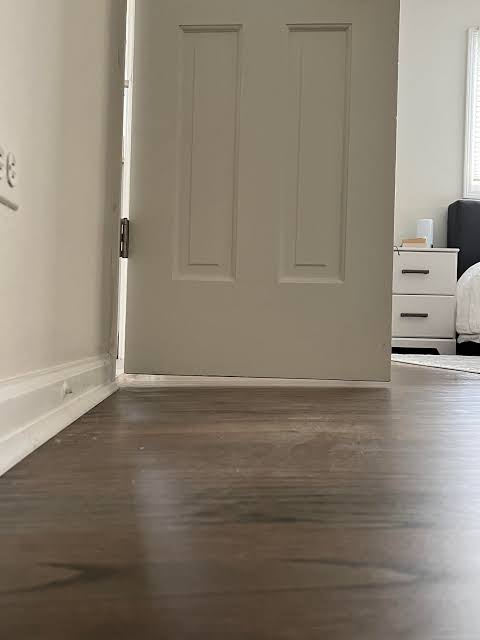
- Sloping or uneven floors — a marble that rolls, or furniture that won’t sit level.
- Bouncy or springy floorboards — movement underfoot as you walk across a room.
- Doors and windows that stick — frames pulled out of square as the floor drops beneath them.
- Stair-step cracks in brickwork or plaster — diagonal cracking that follows the mortar joints.
- Gaps opening at the skirting boards — the floor moving away from the wall, or the wall away from the floor.
- A musty smell under the house — poor subfloor ventilation, which is what rots timber stumps in the first place.
One of these on its own might be nothing. Two or three together, in a house built before 1970, usually means the stumps are going.
Why Bendigo ground is different
Most restumping companies will tell you timber stumps rot. True everywhere. What’s specific to Bendigo is what those stumps are standing on — and it’s unlike anywhere else in the state.
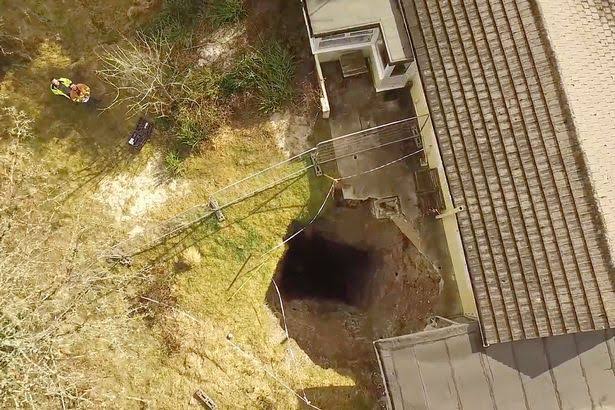
You may be living over a mine
The Bendigo goldfield contains 37 separate gold-bearing quartz reefs across an area roughly 16 kilometres by 4 kilometres. More than 5,000 registered gold mines were sunk inside it. At least 140 shafts went deeper than 300 metres, 67 deeper than 600, and eleven passed 1,000 metres — the largest concentration of deep shafts anywhere in the world.
That 16 by 4 kilometre area is not a historical curiosity out past the town limits. It is residential Bendigo. Long Gully, Golden Square, Ironbark, California Gully, Quarry Hill and Eaglehawk all sit inside it, and the reef lines run at an angle to the street grid rather than politely around it — the Deborah, Sheepshead and Garden Gully reefs all pass beneath established Golden Square streets.
Mine subsidence is an official site classification here
Under AS 2870, most Australian residential sites are classified by how reactive the clay is — Class A through E. There’s one further category, Class P, for problem sites where the ground simply can’t be relied on to carry load evenly. Mine subsidence is one of the conditions that triggers it, and Victorian building guidance names Bendigo specifically as a place where it applies.
A Class P site means standard footing design doesn’t. It means specific engineering, and it means a restumping job that ignores what’s below is treating a symptom.
And reactive clay on top of all that
Central Victorian reactive clay runs through Bendigo’s established suburbs and its newer estates alike. It swells when wet, shrinks when dry, and lifts and drops the ground through every season. In a stumped house that shows up as floors that move a little each year. In a slab-on-ground home out at Maiden Gully or Strathfieldsaye it shows up as cracking — and that’s an underpinning problem, not a restumping one.
Why that matters for your quote
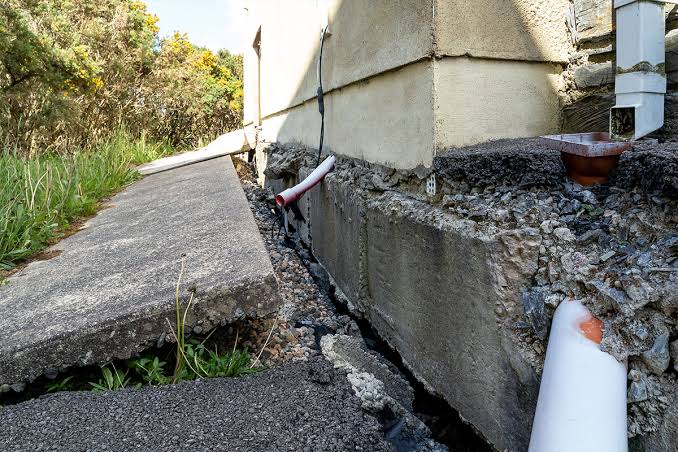
Rotten stumps, ground subsidence over old workings, and seasonal clay movement all produce sloping floors and cracked walls. They look identical from inside the house. They are not the same problem, they don’t cost the same to fix, and replacing stumps won’t help if what’s actually moving is the ground under them.
That’s why we get under the house before we price anything. We’ve written up the full picture here if you want to understand what’s happening beneath your home.

Restumping, reblocking or underpinning — which do you need?
Restumping
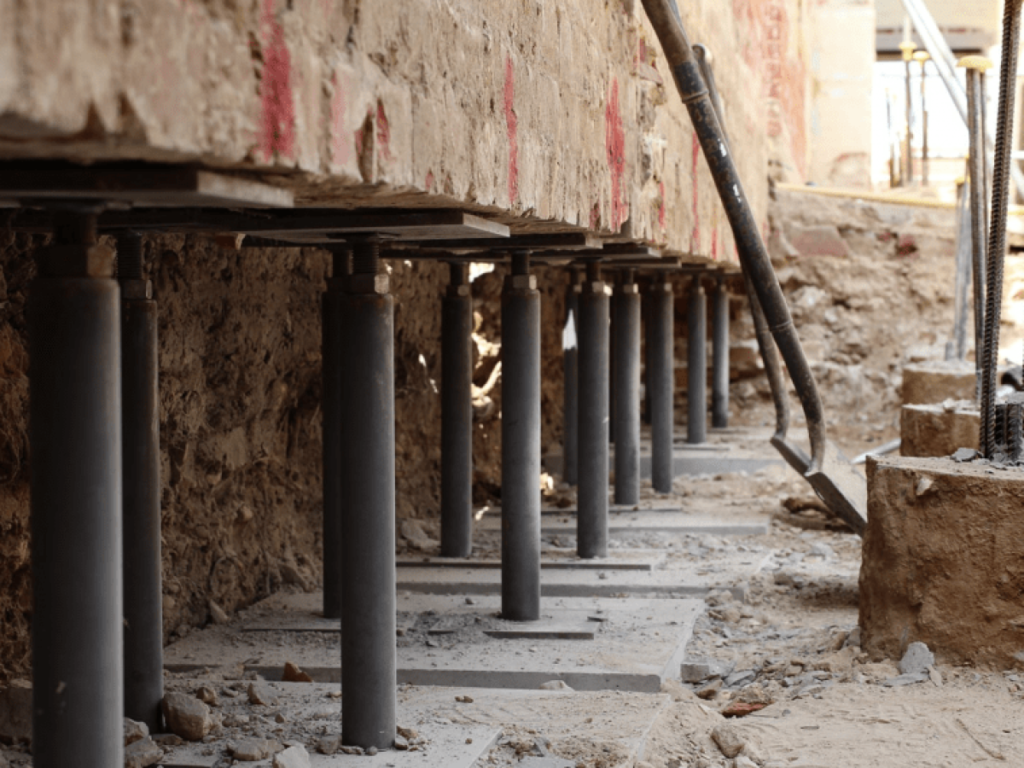
Replacing the stumps under a suspended timber floor. If your house sits up off the ground and the stumps have rotted, cracked or sunk, this is the job. Old timber goes out, new concrete or galvanised steel goes in, and the floor comes back to level.
Reblocking
The same work under a different name — Victorians use both, and plenty of people use them interchangeably. If you’ve been quoted for one and told you need the other, you’re almost certainly talking about the same job.
Underpinning
A different thing entirely. Underpinning strengthens or deepens the actual footings, and it’s what you need when the ground has moved rather than the stumps failing. It’s the answer for slab-on-ground homes and for houses over disturbed or undermined ground. It costs more, and it needs engineering.
Levelling and relevelling
Bringing a floor back to level without replacing everything — sometimes on its own, sometimes as part of a restump. Worth asking about, because it’s occasionally all a house needs.
You don’t need to work out which one you’re after before you call. That’s our job, and it’s the first thing the inspection settles.
How the Job actually runs
Subfloor Inspection
We inspect beneath the house or inside the crawl space, checking every stump, bearer and joist, along with the ventilation and condition of the ground.
Diagnosis
We determine whether the problem is caused by damaged stumps, ground movement or a combination of both. Difficult sites may also require an engineer’s assessment.
Fixed Written Quote
Your written quote clearly outlines the stump count, materials, permit requirements, engineering costs and the making-good work included.
Building Permit
Restumping is structural building work in Victoria. The required building permit and registered building surveyor are organised as part of the process.
Jacking and Levelling
The house is carefully lifted in controlled stages to avoid placing unnecessary stress on the frame before it is progressively brought back to level.
Stumps Replaced
Failed stumps are removed and replaced with concrete or galvanised steel stumps installed into properly excavated footings suited to the site conditions.
Sign-Off and Making Good
The work is inspected by the building surveyor. Any included plaster cracking or disturbed finishes are then attended to before the job is completed.
What restumping costs in Bendigo
Nobody in this industry publishes prices, which leaves homeowners ringing around for quotes with no idea what a fair number looks like. Here’s what the work actually costs in central Victoria in 2026.
- Per stump, supplied and installed: roughly $280–$550, before permits and engineering. Tight subfloor access, deeper footings and premium stumps push it up.
- A full house restump: commonly $12,000–$30,000 including the building permit and engineering.
- Partial restumping — just the failed section — costs proportionally less, and it’s often the right call.
- Underpinning: $15,000–$40,000+, typically $1,200–$2,500 per pier, because it involves excavation and engineered design.
Five things move the number: stump count (the single biggest factor), subfloor clearance and access — a low, tight subfloor is slow work — stump material, ground conditions and footing depth, and whether you’re doing the whole house or one section.
Two things to be wary of when you compare quotes. Be sceptical of any price given without someone physically getting under your house — the stump count and the access are the price, and neither can be assessed from the kerb. And be careful with hourly-rate pricing, which can climb well past the estimate once work starts. We quote fixed.
Our full cost guide breaks down every variable, including what permits and engineering typically add.

If Restumping Isn't the Answer
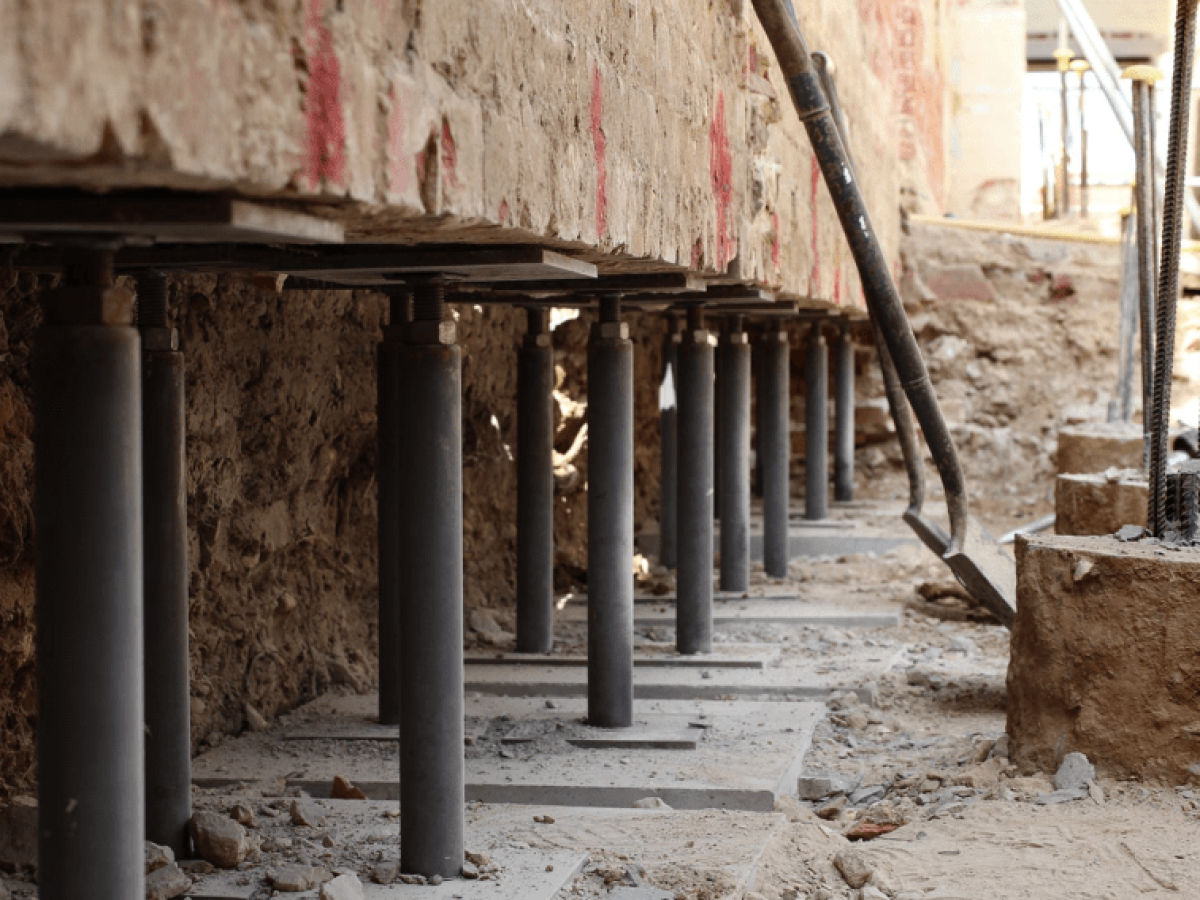
Underpinning
A different thing entirely. Underpinning strengthens or deepens the actual footings, for when the ground has moved rather than the stumps failing. The answer for slab-on-ground homes and houses over disturbed or undermined ground.

Levelling & Relevelling
Bringing a floor back to level without replacing everything — sometimes on its own, sometimes as part of a restump. Occasionally it’s all a house needs.
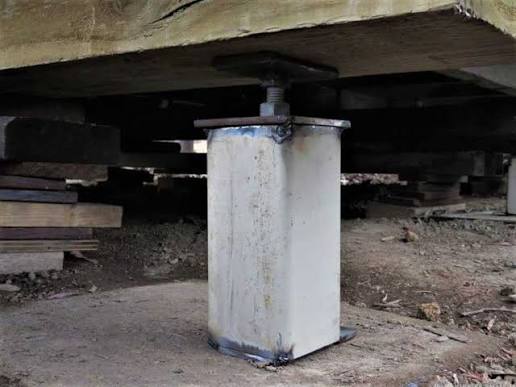
Jack & Pack
Packing and adjusting sound existing stumps to bring the floor back to level, instead of replacing the lot. Far cheaper than a full restump — and if your stumps are structurally fine and have just settled, it may be all you need.
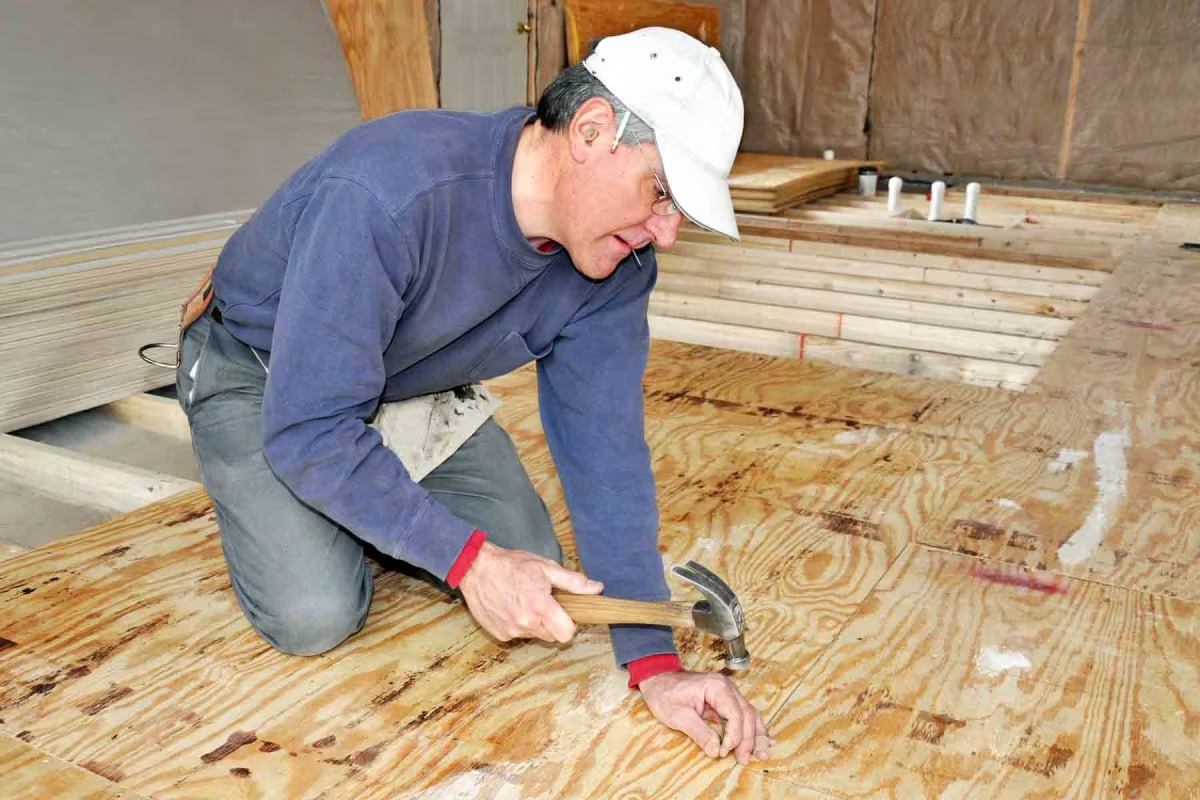
Subfloor Repairs & Ventilation
Rotted bearers and joists, damaged floorboards, and the subfloor ventilation that caused the problem in the first place. Replacing stumps without fixing poor ventilation just restarts the clock.
Where we work in Bendigo
Bendigo’s suburbs fall into three distinct eras, and the era decides the job.
Gold-era suburbs — original timber stumps
Houses from the 1850s to about 1910, mostly timber workers’ cottages, and the ones most likely to still be sitting on their first set of stumps. This is the bulk of our work: Long Gully, Golden Square, Quarry Hill, Ironbark, California Gully, Eaglehawk, Kangaroo Flat, White Hills and Specimen Hill.
Post-war suburbs — second-generation stumps
Built from the 1950s through the 1970s. Some on stumps, some on early slabs. The stumps here are newer but many are now at the end of their service life: Flora Hill, Kennington, North Bendigo and Bendigo East.
Newer estates — slab on ground
Maiden Gully, Epsom, Strathdale, Junortoun, Strathfieldsaye, Huntly, Jackass Flat and Marong are largely slab-on-ground. There are no stumps to replace in these homes — but reactive clay still cracks slabs out here, and that’s underpinning and slab repair rather than restumping.
We also work the surrounding goldfields towns — Castlemaine, Maldon, Kyneton, Heathcote, Elmore, Rochester and Echuca — where the housing stock and the ground tell the same story.
Why homeowners
choose us

We diagnose before we quote
Somebody gets under your house first. You’ll be told whether it’s the stumps, the ground, or both — and if the answer is “this doesn’t need doing yet”, you’ll be told that too.
We know what’s under Bendigo
Gold-era stumps, old workings, Class P sites and reactive clay. Foundation work here isn’t the same as foundation work in the suburbs of Melbourne, and it shouldn’t be quoted as if it is.
We publish our prices
The ranges shown on our website are real. You can budget before you speak to anyone, including us.
Same-day response
Send an enquiry and you’ll hear back the same day — not in a few days’ time.
FAQ
Typically $12,000 to $30,000 for a full house, or around $280 to $550 per stump if only some need replacing. Underpinning — where the ground rather than the stumps is the problem — typically runs $15,000 to $40,000 and up.
The spread is wide because the cause decides the method, and the method decides the price. Full breakdown of what drives the number.
Sloping floors, cracks above windows and doors, sticking doors and bouncy floorboards are the usual signs — but they have three different possible causes in Bendigo, and they cost very different amounts to fix.
The only way to know is to measure floor levels across the whole house and look underneath. Plenty of period houses here sit slightly out of level, structurally sound, and have done for a century. The three causes, and how to tell them apart.
Some cosmetic cracking should be assumed rather than hoped against — the house is being moved, and lifting is done in stages specifically to keep that to a minimum. On old lath or lime plaster, some movement will show.
Most people stay in the house, though expect noise, vibration and periods where parts of the floor are inaccessible.
Worth settling in writing beforehand: who patches, what "make good" covers, and whether painting is included. It very often isn't.
Depends which kind of brick, and the difference matters because the price gap is large.
Brick veneer — a timber frame with a brick skin — usually has a suspended timber floor on stumps behind the brickwork. Those stumps can be replaced like any others.
Solid or double brick with a timber floor is two structures at once: the walls sit on strip footings, the floor sits on stumps. The floor can be restumped. If the walls are what's moving, that's a footing problem and it needs underpinning instead — and some houses need both. More on houses with two foundations.
Brick on a concrete slab has no stumps at all, so restumping is impossible. Underpinning or resin injection are the only structural options.
The quickest way to tell: look for subfloor vents low on the external walls. Vents mean a subfloor, which means stumps.
For the work itself, not really — it isn't weather-dependent the way roofing is. Wet winters make excavation messier and subfloors damper to work in, but that affects comfort more than outcome.
For working out what's wrong, timing matters a lot. Reactive clay is at its driest in late summer, so that's when shrinkage is greatest, cracks are widest and movement is most visible. Assess the same house after a wet winter and the clay has swollen, cracks may have closed, and the problem can look considerably milder than it is.
Which cuts both ways: a late-summer assessment shows you close to the worst case, and a spring one can understate it. If you're not in a hurry, the genuinely useful thing is to measure at both ends of the cycle. How to monitor it across a season.
Bendigo and the surrounding shire. The suburb matters for more than travel time — it usually tells you what the house is sitting on before anyone visits, and one whole group of suburbs can't be restumped at all because the housing sits on slabs.
There isn't a one-size-fits-all timeframe, because every house is different. Duration depends on the number of stumps being replaced, the size of the home, access beneath the floor, the condition of the existing subfloor, and whether additional work such as relevelling, bearer replacement or underpinning is required.
Most projects begin with a structural inspection to determine the cause of the movement before any schedule can be confirmed. If reactive clay, historic mine-related ground movement and deteriorated stumps are all contributing, the repair strategy may involve more than simply replacing stumps.
Rather than relying on a generic estimate, you'll get an expected timeframe after the property has been inspected and the structural condition beneath the floor assessed.
In Victoria, structural building work such as restumping or reblocking may require a building permit depending on the scope of the work. Requirements can differ depending on whether stumps are being replaced, repaired or packed, and whether underpinning forms part of the project.
Permit requirements are determined under the Victorian Building Regulations and can also depend on the specific circumstances of the property. Before work begins, we'll confirm the position with the City of Greater Bendigo so you know what applies to your job rather than guessing at it.
If your property is affected by a Heritage Overlay or other planning controls, additional approvals may also be required before structural works commence. More on heritage precincts and planning approvals.
Structural work of this kind must be carried out by an appropriately registered building practitioner. Before anything starts, you'll be given the name and registration number of whoever will be working on your house, in writing, so you can check it yourself on the Victorian Building Authority register.
You should expect that from anyone quoting you, not just from us. A registration number that can't be produced, or doesn't check out when you look it up, is the single most useful thing you can screen for — and it takes about two minutes.
You'll also know before work begins exactly what's included in the scope and what isn't, because that's where most disputes on this kind of job start. The nine questions to ask any quote.
The lifespan of house stumps depends on the material, drainage, soil conditions and subfloor ventilation rather than age alone. Well-installed concrete stumps commonly last for many decades, while timber stumps can deteriorate sooner where they stay exposed to moisture, termites or fungal decay.
Galvanised steel stumps are also designed for long service life — but whatever the material, the thing that shortens it is water. A downpipe discharging beside the house or a subfloor that can't dry out will do more damage than the choice between concrete and steel ever will. Concrete versus galvanised steel, compared.
Many period homes across Bendigo still sit on original timber stumps that may now be significantly deteriorated. If floors have become uneven, doors have started sticking or cracks keep reappearing, the priority isn't the age of the stumps — it's establishing which of the three possible causes is actually moving the house.
Book a subfloor inspection
If your floors are sloping, your doors are sticking, or the cracks in your walls have stopped closing up, get someone under the house before you get a price. We’ll tell you what’s actually moving, whether it needs doing now, and what it costs — fixed, in writing.